The Fullness of Spring

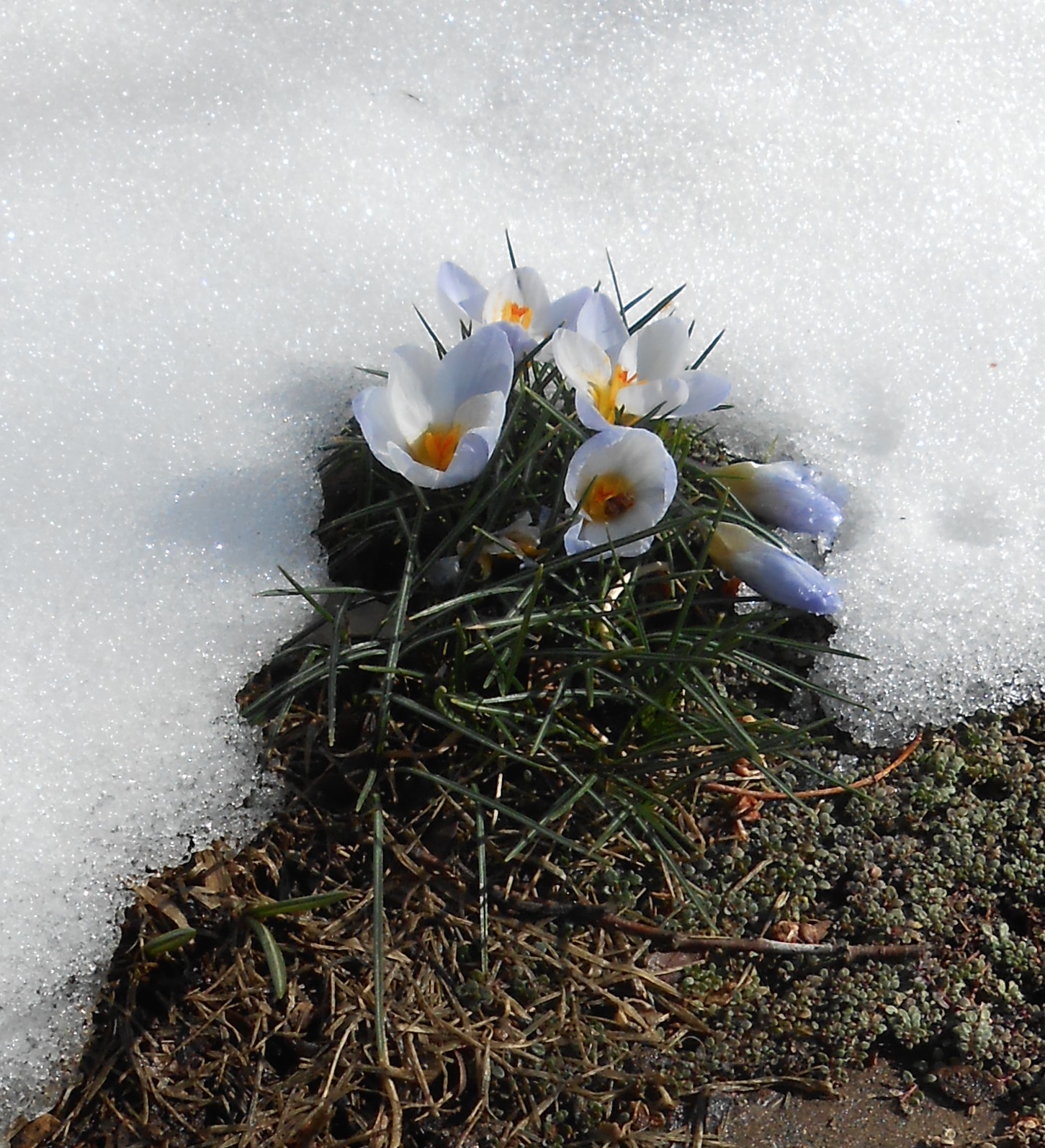
A couple of weeks ago, I found a cluster of crocuses, surrounded by a mantle of snow. It seemed the perfect symbol for Spring Equinox, the balance point between winter and summer, snow and flowers.

DSCN0155

We are in the fullness of spring. The days and nights are of equal length. It is the moment of poise between the dark side of the year and the light.

Winter has its gifts—deepenings from the hard times, openings from the deep times, wisdom from our inward journeys.

As the light lengthens, let us bring those gifts to the new life unfolding around us. May we awaken our senses to the sound of bird song, the touch of warm wind, the smell of rain and freshly turned earth, the colors of flowers, the heat of the strengthening sun, the feel of cool, moist grass under bare feet.

Our senses are the link of delight between our bodies and the Earth. Body and Earth are of the same stuff (humus-human), and delight is the essence of love. What we love, we cherish.

As we delight in the sensuousness of spring, let us cherish and care tenderly for our beloved Earth, renewing once again, over, beneath and around us.

Forms Change

Forms changing is an important underlying theme of Leaves In Her Hair.

Derwydd says to Lyra, “The only thing that is real is the light before form and after form dissolves. Forms are a dream. And they change; forms always change.”

So it is.

An ocean wave rolls along as a round bulge in the surface of the sea; rears up as it comes to shore, white lace blowing back from its crest; curves into a shining arc; then crashes into a churning chaos of foam

A tree grows from a shoot to magnificent height, falls, crumbles, returns to earth.

Water can be a crystal of snow, a sheet of ice, liquid in an infinity of shapes, clouds flying in the sky, mist rising from the earth.

All living creatures, including us humans, are born, grow, flourish, age, and die, returning to dust and ashes.

Even though we are surrounded by mutability, there is a strong instinct in human kind to cling. We cling to youthful beauty, to the ecstasy of new romance, to the magic of a starry-eyed toddler, even to such ephemeral accomplishments as a clean house or a freshly weeded garden. We know we will grow old; romance will either shatter or settle into comfortable familiarity; the toddler will eventually become a challenging, maybe even pimply, adolescent; the house and garden will soon need cleaning and weeding again. But still we cling, only to be frustrated, disappointed, heart broken by loss. As Lyra was devastated when Derwydd let go of his dryad shape.

Throughout history, humans in every culture have looked beyond change, seeking something eternal, unchanging, some essence that remains even though visible forms pass.

The psalmist writes, “As for man, his days are like grass; he flourishes like the flower of the field; for the wind passes over it and it is gone, and its place knows it no more. But the steadfast love of the Lord is from everlasting to everlasting.” (Psalm 103)DSCN0049

All the great religions point us to that which is beyond our changing world and urge us to release our attachment to earthly things. Jesus taught, “Do not lay up for yourselves treasures on earth where moth and dust consume and where thieves break in and steal, but lay up for yourselves treasures in heaven . . . For where your treasure is there will your heart be also.”

Some devote their lives to seeking and connecting with the essence beyond form. But most of us live in the world of change, working at our jobs, raising our children, only occasionally glimpsing that other elusive reality.

Lyra experiences a reality beyond form when she goes to her magical glade and dances into the light, but then must come back to her everyday world of childcare and housekeeping.

Clara (Never Again) muses on the rather unusual shifts in her life. “So strange. The Elirians healed me to express my essence. If that is so, why am I uncomfortable in this body? Maybe because an essence belongs on the eternal plane, and I am here in time, walking the earthly path between birth and death.”

How do we dance then, between the eternal and the changing?

I think we must enter fully into life, let it flow through us, knowing it is a flow and any attempt to stop it or cling to its forms is futile. As we surrender to the flow, we may find it easier to be present with each moment. Then we may discover that in the immediacy of the moment, the eternal shines through.

Beauty is Power

Beauty is power. Big time. Especially in our culture that places such an emphasis on it. Being physically beautiful can get a person a job, a lover, admiration, validation, and open doors that are closed to the less physically attractive.

My beloved friend Cedar Barstow has developed an extraordinarily insightful system of ethics that she calls “the right use of power.” She has founded an organization, Right Use of Power Institute, and trained many teachers nationally and internationally in her work. She expresses the essence of right use of power thus: “Power guided by loving concern for the well being of all . . . Power directed by heart. Heart infused with power.”

It is not hard to think of  misuses of the power of personal beauty. We hear of it all the time—manipulation, seduction, entitlement, domination, putting down one perceived to be less beautiful.

What then is the right use of the power of personal beauty? How can we use it to benefit others?

First of all we must let go of ego identification with our beauty, (see my recent blog, Beauty is Dangerous,) then humbly receive it as a gift.

I was walking around Wonderland Lake a few days ago with Cedar, brainstorming on this question. A little girl in bright pink slacks whizzed by on her scooter, blond hair flying, little body light and lively, swift, graceful motion. My heart lifted. I turned to share a smile with Cedar.

In the same way my heart lifts when I see the shining eyes of my grandchildren.014-3 Or when I go to a tango dance and delight in the beautiful clothes the dancers are wearing and the grace and precision of their movement.
We have an expression “eye candy.” The sight of a handsome man or a beautiful woman is sweet.

Beauty delights, and one right use of its power is to let it shine.

But there is a deeper question. What is beauty really?

Is it a culturally approved shape of nose, eyes, lips, body? I think not. That is fashion. Fashion changes all the time, and in my experience only occasionally aligns with beauty. I noticed, when I was studying fashion magazines to better understand this question, that most of the models looked sullen. It seems pouting is fashionable nowadays. But I do not think it is beautiful.

No matter what the shape of nose or body, people shine with beauty when they are happy or filled with enthusiasm.

This kind of beauty attracts, draws people to us. Then if we have something to share, if we are teachers, therapists, artists, or business people with a good idea, we have the opportunity to enrich the lives of those drawn to us because of our gift of personal beauty.

The give and take in such a situation creates connection. Those drawn to us appreciate us, and that appreciation opens us to give more freely. Connection is something we all long for. Shining and sharing in this way, is another right use of the power of beauty.

There is a deeper level still.

My friend Charly Heavenrich  is a canyon guide and has for many years taken people on raft trips down the Grand Canyon. He tells me that after a week or so, all the faces of the people in his group are beautiful, stripped of the stress of their usual lives and filled with awe at the magnificence of the canyon.

I have seen that same kind of beauty in the faces of those with whom I have shared a meditation retreat or a Summer Solstice long dance.

Perhaps the most profound way to use the power of beauty is to seek out and develop those experiences and practices that clear away the debris, so that our true selves, our essence, Love, God within us can shine forth.

Then all in our presence are blessed.
The Beginning of Spring

February first is Imolc or Candlemas, the first day of spring.

In American culture we count the season’s beginning on the quarter days, the Solstices and Equinoxes. In Gaelic tradition, the beginning of the season comes on the cross-quarter days, the midpoints between Solstices and Equinoxes.

The Gaelic way makes more sense to me because it goes with the changes of the light. Warm days or freezing, rain or snow can come and go three seasons of the year in Colorado—Rocky Mountain springtimes are notoriously fickle—but the changes of the light are reliable.

So, for me, at this midpoint, February first, spring begins. The light is now the same as it was on the last cross-quarter day, November first, Samhain or All Hallows. We have just come through the darkest three months of the year.

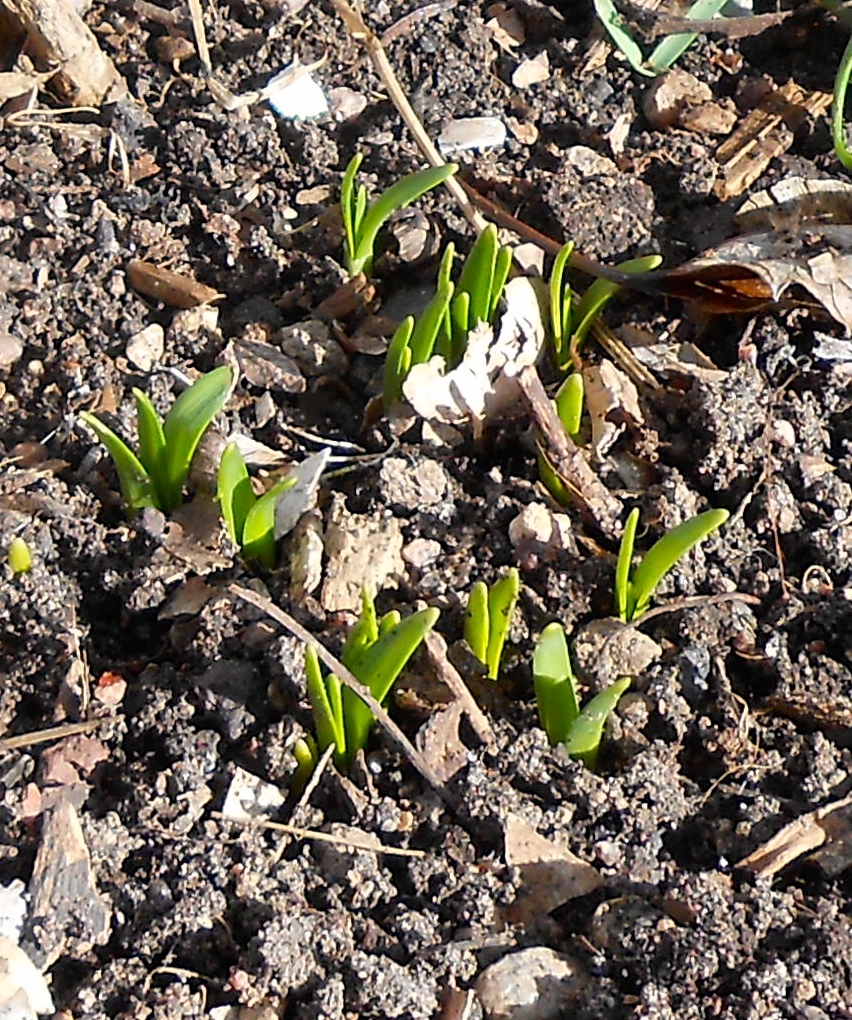
Deep in the earth seeds are stirring. Some bulbs are even pushing their first new green shoots up into the lengthening sunlight. The light lingers longer in the late afternoon, and sunrise comes earlier, suffusing the eastern sky with its rosy glow.DSCN0119

This season has been celebrated for hundreds of years. In Gaelic lands, Imolc was a time to honor the Goddess Brigid, who was symbolically invited into homes to bless the inhabitants at the beginning of the new cycle. Ceremonial hearth fires were lit, and there were processions of young maidens dressed in white carrying images or symbols of the goddess. In Christian churches the ceremony was called Candlemas, Saint Brigid was honored, and the season celebrated by the lighting of candles. Some of these traditions are still carried on.

In the United States we have groundhog day.

I celebrate this time by rejoicing in the longer late afternoons, sometimes going for a walk at dusk; and in the early mornings, taking time to watch the sunrise and drink in the beauty of bare tree branches against the rose and orange sky. I also look inward to the seeds stirring in the dark earth of my spirit.

How about you? What seeds stir within you for the coming season, what dreams do you hope to manifest as the light grows?

Beauty Is Dangerous

Physical beauty is double-edged sword, for both men and women. It opens doors for us, bolsters our self esteem, but because of our cultural complexity, it can also entangle us, get us into trouble.

Clara (Never Again) muses on her new-found youthful beauty. “Now the beauty I had been given felt somewhat dangerous. I wanted to hide it, diminish it. Beauty attracts, and I’d always fallen in love too easily with anyone who desired me. Off I’d go on the romance roller coaster. Only that roller coaster was not like the ones in amusement parks where you step off safely at the end of the ride. My roller coasters always crashed and broke my heart. Would I be any wiser now?”

Being beautiful can become an obsession. Is my hair right? my clothes? Oh, no! is that a pimple? Am I thin enough, buff enough, tall enough? Am I pretty enough to be loved?

As I wrote in my last post, we can spend huge amounts of money and energy trying to shape ourselves to an image that is rarely attainable or even real.

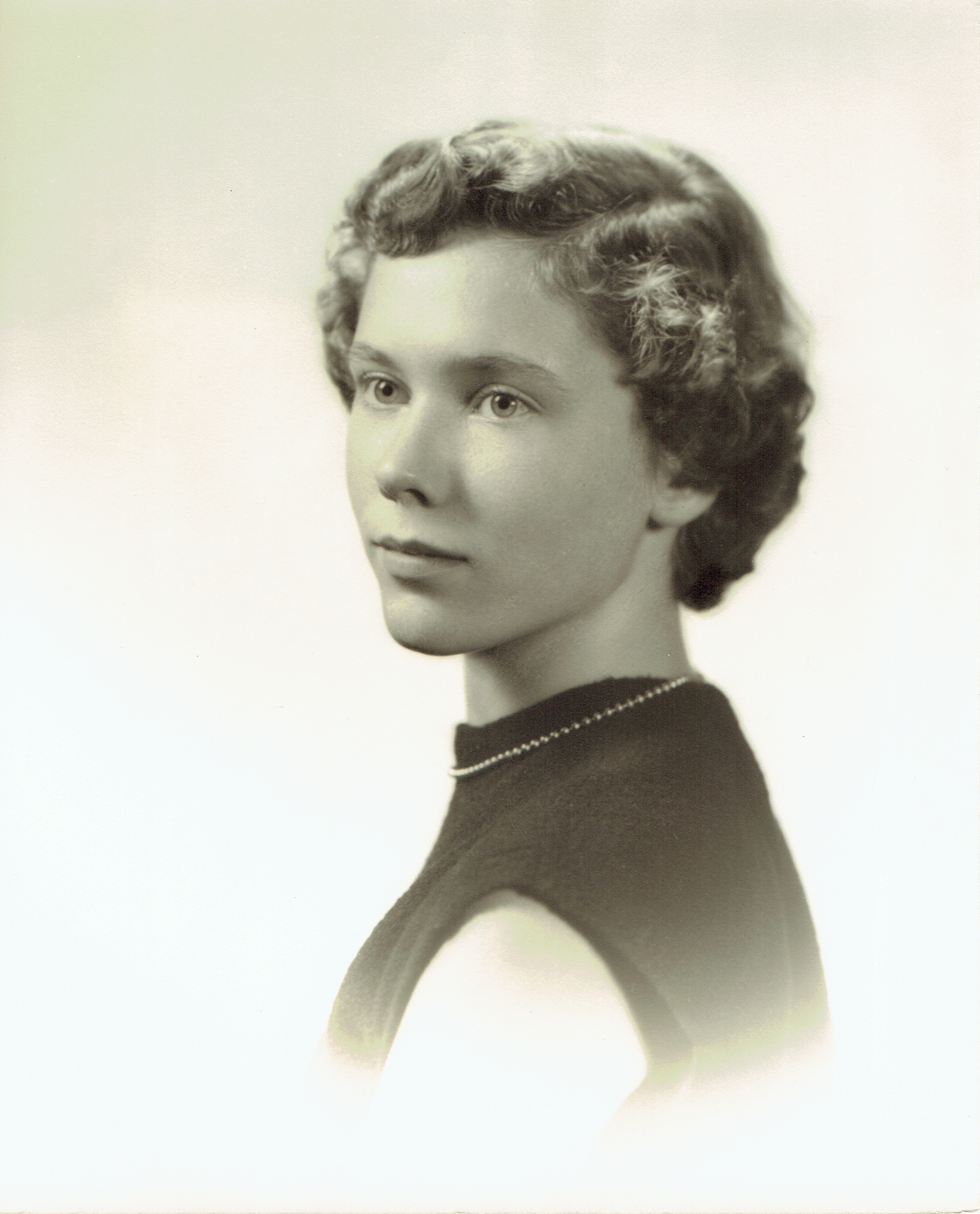
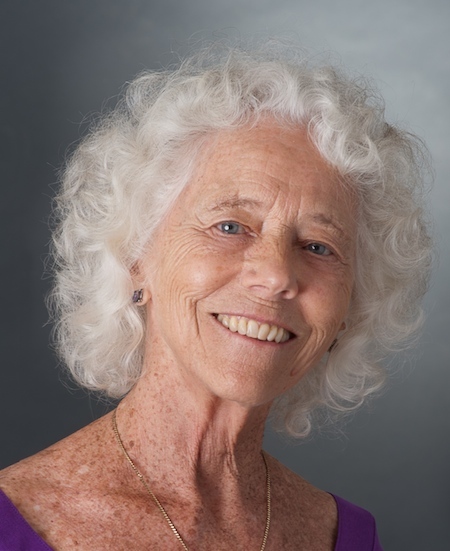
If we do succeed in feeling we’ve achieved our goal, the greatest danger of all is to identify with it. Our culture, with its many advertisements for beauty products and procedures, teaches us that if we are beautiful the world will open for us, we’ll be popular, we’ll find our true love, we will succeed. But physical beauty is an ephemeral security. It can be altered in a moment by injury, corroded by illness, and finally, inevitably, worn away by aging, year by year, until the face we see in the mirror bears little resemblance to the picture in our high school year book.

1953

1953

2014

2014

If it is love we seek, or worldly success, perhaps we need to turn inward to find the eternal beauty of compassion, listening, caring.

The Lure of Youthful Beauty

I have been challenged by some of my readers because the protagonists in all my novels are exceptionally beautiful. Perhaps in my next novel my heroine should be a plain, somewhat lumpy, middle-aged woman.

But that is hard for me. I want my readers to love my protagonists. Do I believe that  a woman can only be loved if she is beautiful?

Certainly our culture tells us that. And we respond, bending ourselves all out of shape to fit the images of youthful beauty that surround us in the media. Make up, jewelry, clothes, hair dos and hair color, skin creams. More radically, face lifts, tummy tucks, breast implants.

eye make-up

I read in the paper just the other day that the latest fad is bodacious buttocks. You can buy padded panties, get buttock implants. Really. I’m not making this up. It was in the newspaper. “Businesses that specialize in butts say pop culture has had a direct impact on their bottom line.” So to speak.

What are we really looking for with all these efforts? The prince on the white horse to carry us away to happily ever after? (Note that the fairy tales rarely tell us what happens after the marriage of the beautiful maiden and the prince.)

I searched  several beauty magazines in the bookstore for inspiration. I remembered beauty product ads that showed a handsome man leaning over the shoulder or kissing the cheek of the woman using the product, but to my surprise I found only one of those. All the rest showed the woman standing alone in all her glory.

So maybe it’s not the prince, but an image we want to create. Why? For whom?

I am curious. Is the whole beauty rage more about image now than finding love?

What do you think?

In what ways do we disown ourselves when we cover or alter our natural beauty to fit the model?

One of my favorite lines of poetry is from Keat’s “Ode to a Grecian Urn.”

“Beauty is truth, truth beauty.”

Winter Solstice

The still point of the turning year. The longest night. “Solstice,” in its Latin origins, literally means “the sun stops.”

There is magic in that moment of stasis.

When we ride on a swing, the higher we go the slower we go, until that brief ecstatic moment when we hang suspended before descending again.

The dance of Sun and Earth is like that. The Solstices, summer and winter, are like the peak moments of the swing. The light changes more slowly as it approaches its shortest or longest day, hovers for a moment at the Solstice, then picks up speed as it moves toward the Equinoxes, when the days and nights are equal. Just as the swing descending moves fastest as it skims its closest point to Earth.

Howard Thurman, a beloved friend and teacher to me, was Dean of the Chapel at Boston University when I was a student there. In one of his sermons, he told a story about being a boy in Florida, fishing in a small boat in the ocean. He described how his line would pull taut, drawn out to sea with the outgoing tide. Then it would suddenly go slack. His buoy would rock on the waves for a short while, until the line swung slowly around to pull toward shore as the tide turned.

One of my Sufi teachers, guiding us in a breathing meditation, said, “Between the inhale and the exhale, realize. Between the exhale and the inhale, realize.”

Swing, seasons, tide, breath—all move with this rhythm.

As we enter the still point of the longest night, may we pause to receive that moment of stasis and open to its gifts.

  T.S. Eliot, from Four Quartets

“I said to my soul, be still, and wait without hope

For hope would be hope for the wrong thing; wait without love

For love would be love of the wrong thing; there is yet faith

But the faith and the love and the hope are all in the waiting.

Wait without thought, for you are not ready for thought:

So the darkness shall be the light, and the stillness the dancing.”

Welcome

Welcome to my blog.

I love stories, and am also fascinated by the issues underlying them. What are we really writing or reading about? When a story is done well, the underlying theme is implicit, yet it touches us, moves us to weep, uplifts us, challenges our thought patterns.

Ursala LeGuin is a master of this art. I have delighted in her novels since I first read The Wizard of Earthsea decades ago. When I began to write my first novel, she was my inspiration.

In the Wizard of Earthsea, the young hero, driven by pride, unleashes an evil into his world. He pursues it throughout the islands of Earthsea, seeking to learn its name and so master it, and finally succeeds only when he calls it by his own name. The essence of projection is stunningly expressed, with never a didactic word.

My own novels have been inspired by my personal struggles.Yet not mine alone. The deepest struggles of humankind are universal. We all seek to find ourselves and our purpose in life, to succeed in our endeavors, to love and be loved. We must all deal at one time or another with disappointment, failure, the heartbreak of love lost. We must all face death. When I give my personal struggle to my protagonist to solve, it becomes greater than just my struggle. Often my protagonist figures it out better than I do. So I am healed. Such is the power of story. And the joy of writing.

In the blog posts to come, I will be exploring the underlying issues of my own novels and novels that have touched me deeply.

I welcome your comments. Let’s have a conversation